
The next date that will not waitnight
Milky Way core — 21:10 to 22:30
1.3 hours of true astronomical dark with the core above 20° and the moon below the horizon, peaking at 29°. The moon is 5% and down — this is as dark as this longitude gets. Forecast cloud 0%. The core never climbs past 29° at this latitude, so it sits low in the south — you need a southern horizon with no town behind it.
Go when new-moon dark meets 0% forecast cloud and core above 20 degrees for 1.3 hours
741 subjects within two hours of Lakeland · 4 of them in season right now
This is the index built for the week of 2026-09-13, not this week — the newest one did not finish. The times below were computed for that week, so treat them as a guide rather than as tonight.
The index25
25 of 741 match, in the order they happen.
Each one is a subject, a spot, and the season it runs — grouped by how soon it matters. 4 of the 10 on the map are in season right now, in Nov. Say what is in your bag and it will tell you which of these your longest lens actually reaches.
Show me anythingwildlifenight skieswaterweathereventsbloomswithin any drive30 min60 min90 min120 minand anywherewhere I can flywhere flying might be allowed
No account needed — your kit stays in the address bar.
12 subjects the forecast has resolved · open one to see what fires it
 Openverse contributor · CC0 1.0Milky Way core — 21:10 to 22:30Kissimmee Prairie Preserve — the darkest sky in the peninsula · 101 min · drone no — state parkSep 13today
Fires when new-moon dark meets 0% forecast cloud and core above 20 degrees for 1.3 hours
Next Sun, Sep 13 — the published start time. Moon dates come from a mean lunar month and can be a day out; check before you commit a four-hour drive to one.
Wants 14–24mm at f/1.8 or faster, 15-20s at wide aperture, ISO 3200-6400, focus stacked foreground optional, on a tripod
1.3 hours of true astronomical dark with the core above 20° and the moon below the horizon, peaking at 29°. The moon is 5% and down — this is as dark as this longitude gets. Forecast cloud 0%. The core never climbs past 29° at this latitude, so it sits low in the south — you need a southern horizon with no town behind it.
This week: new-moon dark meets 0% forecast cloud and core above 20 degrees for 1.3 hours
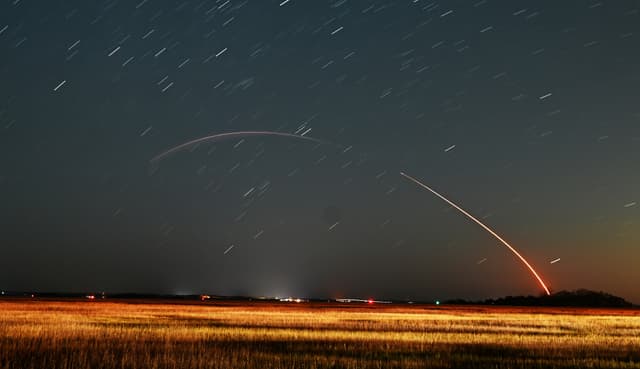 Bubba73 · CC BY-SA 4.0Falcon 9 Block 5 | O3b mPower 11-13Titusville causeways / Space Coast · 100 min · drone no — launch TFRSep 13today
Fires when launch falls this week but 40% slip risk means recheck at T-24h, refuge gate closes 7:32pm covering the evening window
Next Sun, Sep 13 — the published start time. Moon dates come from a mean lunar month and can be a day out; check before you commit a four-hour drive to one.
Wants 24–200mm at f/4 or faster, 1/1000s for ascent, wide for plume against sky, on a tripod
Status In Flight from Space Launch Complex 40, Cape Canaveral SFS, FL, USA. 40% of announced dates slip; commit at the T-24h recheck, not the calendar. ACCESS: Merritt Island NWR — Black Point and Bio Lab drives: 7:08am to 7:32pm.
This week: launch falls this week but 40% slip risk means recheck at T-24h, refuge gate closes 7:32pm covering the evening window
 a stand-in, not thisMartin Mark · CC BY-SA 4.0Bioluminescent lagoon — 8.7h of true dark, 21:00 to 05:40Haulover Canal / Mosquito Lagoon, Merritt Island NWR · 108 min · drone no — national wildlife refuge, and it is pitch darkSep 13today
Fires when warm water and near-new moon give longest true-dark window of the run but glow itself is unconfirmed
Next Sun, Sep 13 — the published start time. Moon dates come from a mean lunar month and can be a day out; check before you commit a four-hour drive to one.
Wants 24–50mm at f/1.8 or faster, long exposure, ISO 6400+, widest aperture available, on a tripod
Lagoon water is 85.6°F at Trident Pier, Port Canaveral, which is in the range Pyrodinium bahamense wants (80°F and up). The moon is below the horizon for 8.7 hours of astronomical night — it is 6% lit, and barely there anyway. Paddle wash and fish tracks light blue-green; it reads better to the eye than to a sensor, so bring the fastest glass you own and accept the noise. What this cannot tell you is whether it is actually glowing: temperature and darkness are necessary, not sufficient, and no public feed reports bloom density. Call an outfitter before you drive.
This week: warm water and near-new moon give longest true-dark window of the run but glow itself is unconfirmed
 Trougnouf (Benoit Brummer) · CC BY 4.0Bioluminescent lagoon — 8.2h of true dark, 21:30 to 05:40Haulover Canal / Mosquito Lagoon, Merritt Island NWR · 108 min · drone no — national wildlife refuge, and it is pitch darkSep 14today
Fires when 8.2h dark window still strong but moon fraction climbing
Next Mon, Sep 14 — the published start time. Moon dates come from a mean lunar month and can be a day out; check before you commit a four-hour drive to one.
Wants 24–50mm at f/1.8 or faster, long exposure, ISO 6400+, widest aperture available, on a tripod
Lagoon water is 85.6°F at Trident Pier, Port Canaveral, which is in the range Pyrodinium bahamense wants (80°F and up). The moon is below the horizon for 8.2 hours of astronomical night — it is 12% lit, and barely there anyway. Paddle wash and fish tracks light blue-green; it reads better to the eye than to a sensor, so bring the fastest glass you own and accept the noise. What this cannot tell you is whether it is actually glowing: temperature and darkness are necessary, not sufficient, and no public feed reports bloom density. Call an outfitter before you drive.
This week: 8.2h dark window still strong but moon fraction climbing
- a stand-in, not thisMartin Mark · CC BY-SA 4.0Bioluminescent lagoon — 7.5h of true dark, 22:10 to 05:40Haulover Canal / Mosquito Lagoon, Merritt Island NWR · 108 min · drone no — national wildlife refuge, and it is pitch darkSep 15today
Fires when dark window shrinking to 7.5h as moon brightens toward first quarter
Next Tue, Sep 15 — the published start time. Moon dates come from a mean lunar month and can be a day out; check before you commit a four-hour drive to one.
Wants 24–50mm at f/1.8 or faster, long exposure, ISO 6400+, widest aperture available, on a tripod
Lagoon water is 85.6°F at Trident Pier, Port Canaveral, which is in the range Pyrodinium bahamense wants (80°F and up). The moon is below the horizon for 7.5 hours of astronomical night — it is 20% lit, and barely there anyway. Paddle wash and fish tracks light blue-green; it reads better to the eye than to a sensor, so bring the fastest glass you own and accept the noise. What this cannot tell you is whether it is actually glowing: temperature and darkness are necessary, not sufficient, and no public feed reports bloom density. Call an outfitter before you drive.
This week: dark window shrinking to 7.5h as moon brightens toward first quarter
- a stand-in, not thisMartin Mark · CC BY-SA 4.0Bioluminescent lagoon — 6.8h of true dark, 22:50 to 05:40Haulover Canal / Mosquito Lagoon, Merritt Island NWR · 108 min · drone no — national wildlife refuge, and it is pitch darkSep 16today
Fires when dark window down to 6.8h as rising moon eats into the night
Next Wed, Sep 16 — the published start time. Moon dates come from a mean lunar month and can be a day out; check before you commit a four-hour drive to one.
Wants 24–50mm at f/1.8 or faster, long exposure, ISO 6400+, widest aperture available, on a tripod
Lagoon water is 85.6°F at Trident Pier, Port Canaveral, which is in the range Pyrodinium bahamense wants (80°F and up). The moon is below the horizon for 6.8 hours of astronomical night — it is 30% lit, which sounds unhelpful until you notice it has already set: what ends this show is a moon in the sky, not a moon in the sky chart. Paddle wash and fish tracks light blue-green; it reads better to the eye than to a sensor, so bring the fastest glass you own and accept the noise. What this cannot tell you is whether it is actually glowing: temperature and darkness are necessary, not sufficient, and no public feed reports bloom density. Call an outfitter before you drive.
This week: dark window down to 6.8h as rising moon eats into the night
- a stand-in, not thisMartin Mark · CC BY-SA 4.0Bioluminescent lagoon — 6.2h of true dark, 23:40 to 05:50Haulover Canal / Mosquito Lagoon, Merritt Island NWR · 108 min · drone no — national wildlife refuge, and it is pitch darkSep 17today
Fires when dark window shrinks to 6.2h with moon nearly half lit before it sets
Next Thu, Sep 17 — the published start time. Moon dates come from a mean lunar month and can be a day out; check before you commit a four-hour drive to one.
Wants 24–50mm at f/1.8 or faster, long exposure, ISO 6400+, widest aperture available, on a tripod
Lagoon water is 85.6°F at Trident Pier, Port Canaveral, which is in the range Pyrodinium bahamense wants (80°F and up). The moon is below the horizon for 6.2 hours of astronomical night — it is 40% lit, which sounds unhelpful until you notice it has already set: what ends this show is a moon in the sky, not a moon in the sky chart. Paddle wash and fish tracks light blue-green; it reads better to the eye than to a sensor, so bring the fastest glass you own and accept the noise. What this cannot tell you is whether it is actually glowing: temperature and darkness are necessary, not sufficient, and no public feed reports bloom density. Call an outfitter before you drive.
This week: dark window shrinks to 6.2h with moon nearly half lit before it sets
- a stand-in, not thisMartin Mark · CC BY-SA 4.0Bioluminescent lagoon — 5.3h of true dark, 00:30 to 05:50Haulover Canal / Mosquito Lagoon, Merritt Island NWR · 108 min · drone no — national wildlife refuge, and it is pitch darkSep 19today
Fires when dark window down to 5.3h as moon crosses half-lit, diminishing returns
Next Sat, Sep 19 — the published start time. Moon dates come from a mean lunar month and can be a day out; check before you commit a four-hour drive to one.
Wants 24–50mm at f/1.8 or faster, long exposure, ISO 6400+, widest aperture available, on a tripod
Lagoon water is 85.6°F at Trident Pier, Port Canaveral, which is in the range Pyrodinium bahamense wants (80°F and up). The moon is below the horizon for 5.3 hours of astronomical night — it is 51% lit, which sounds unhelpful until you notice it has already set: what ends this show is a moon in the sky, not a moon in the sky chart. Paddle wash and fish tracks light blue-green; it reads better to the eye than to a sensor, so bring the fastest glass you own and accept the noise. What this cannot tell you is whether it is actually glowing: temperature and darkness are necessary, not sufficient, and no public feed reports bloom density. Call an outfitter before you drive.
This week: dark window down to 5.3h as moon crosses half-lit, diminishing returns
- a stand-in, not thisMartin Mark · CC BY-SA 4.0Bioluminescent lagoon — 4.5h of true dark, 01:20 to 05:50Haulover Canal / Mosquito Lagoon, Merritt Island NWR · 108 min · drone no — national wildlife refuge, and it is pitch darkSep 20today
Fires when dark window shrinks to 4.5h with moon past 60% lit, marginal
Next Sun, Sep 20 — the published start time. Moon dates come from a mean lunar month and can be a day out; check before you commit a four-hour drive to one.
Wants 24–50mm at f/1.8 or faster, long exposure, ISO 6400+, widest aperture available, on a tripod
Lagoon water is 85.6°F at Trident Pier, Port Canaveral, which is in the range Pyrodinium bahamense wants (80°F and up). The moon is below the horizon for 4.5 hours of astronomical night — it is 61% lit, which sounds unhelpful until you notice it has already set: what ends this show is a moon in the sky, not a moon in the sky chart. Paddle wash and fish tracks light blue-green; it reads better to the eye than to a sensor, so bring the fastest glass you own and accept the noise. What this cannot tell you is whether it is actually glowing: temperature and darkness are necessary, not sufficient, and no public feed reports bloom density. Call an outfitter before you drive.
This week: dark window shrinks to 4.5h with moon past 60% lit, marginal
- a stand-in, not thisMartin Mark · CC BY-SA 4.0Bioluminescent lagoon — 3.5h of true dark, 02:20 to 05:50Haulover Canal / Mosquito Lagoon, Merritt Island NWR · 108 min · drone no — national wildlife refuge, and it is pitch darkSep 21today
Fires when dark window down to 3.5h with moon over 70% lit, low payoff
Next Mon, Sep 21 — the published start time. Moon dates come from a mean lunar month and can be a day out; check before you commit a four-hour drive to one.
Wants 24–50mm at f/1.8 or faster, long exposure, ISO 6400+, widest aperture available, on a tripod
Lagoon water is 85.6°F at Trident Pier, Port Canaveral, which is in the range Pyrodinium bahamense wants (80°F and up). The moon is below the horizon for 3.5 hours of astronomical night — it is 72% lit, which sounds unhelpful until you notice it has already set: what ends this show is a moon in the sky, not a moon in the sky chart. Paddle wash and fish tracks light blue-green; it reads better to the eye than to a sensor, so bring the fastest glass you own and accept the noise. What this cannot tell you is whether it is actually glowing: temperature and darkness are necessary, not sufficient, and no public feed reports bloom density. Call an outfitter before you drive.
This week: dark window down to 3.5h with moon over 70% lit, low payoff
- a stand-in, not thisMartin Mark · CC BY-SA 4.0Vulcan VC6L | Amazon Leo (LV-01)Titusville causeways / Space Coast · 100 min · drone no — launch TFRSep 29today
Fires when new rocket type but no-earlier-than date only, nothing to act on yet
Next Tue, Sep 29 — the published start time. Moon dates come from a mean lunar month and can be a day out; check before you commit a four-hour drive to one.
Wants 24–200mm at f/4 or faster, tbd pending confirmed launch time, on a tripod
Status TBD from Space Launch Complex 41, Cape Canaveral SFS, FL, USA. Launch Library has this no-earlier-than September 2026 and no closer: the Wed, Sep 30 you may see quoted elsewhere is the last day of that month standing in for the whole of it, not a date anybody has announced. Worth knowing it is coming; nothing to leave the house for until the range narrows to a day, which for a Cape flight is usually two to three weeks out. ACCESS: Merritt Island NWR — Black Point and Bio Lab drives: 7:08am to 7:32pm.
This week: new rocket type but no-earlier-than date only, nothing to act on yet
 Openverse contributor · CC0 1.0Falcon 9 Block 5 | Crew-13Titusville causeways / Space Coast · 100 min · drone no — launch TFRSep 29today
Fires when no-earlier-than date only, nothing to shoot until range narrows to a day
Next Tue, Sep 29 — the published start time. Moon dates come from a mean lunar month and can be a day out; check before you commit a four-hour drive to one.
Wants 24–200mm at f/4 or faster, tbd pending confirmed launch time, on a tripod
Status TBD from Space Launch Complex 40, Cape Canaveral SFS, FL, USA. Launch Library has this no-earlier-than September 2026 and no closer: the Wed, Sep 30 you may see quoted elsewhere is the last day of that month standing in for the whole of it, not a date anybody has announced. Worth knowing it is coming; nothing to leave the house for until the range narrows to a day, which for a Cape flight is usually two to three weeks out. ACCESS: Merritt Island NWR — Black Point and Bio Lab drives: 7:08am to 7:32pm.
This week: no-earlier-than date only, nothing to shoot until range narrows to a day
When the conditions are not there, this says watch, not go — and names what is missing. A wrong moon or a front that never arrived is worth more to you than a confident guess.
The region10 spots
Everything within two hours of Lakeland.
- wildlife
- night skies
- water
- weather
- events
- blooms
- out of season
Ocala to Sarasota, coast to coast. The shaded ground is a two-hour drive from Lakeland on real roads, not a radius — generalised to about a mile for drawing. Dashed rings are 30, 60 and 90 minutes. Coastline from Natural Earth, served from a file in this repository: no tile vendor, no key, and nobody outside this site learns where you shoot.